
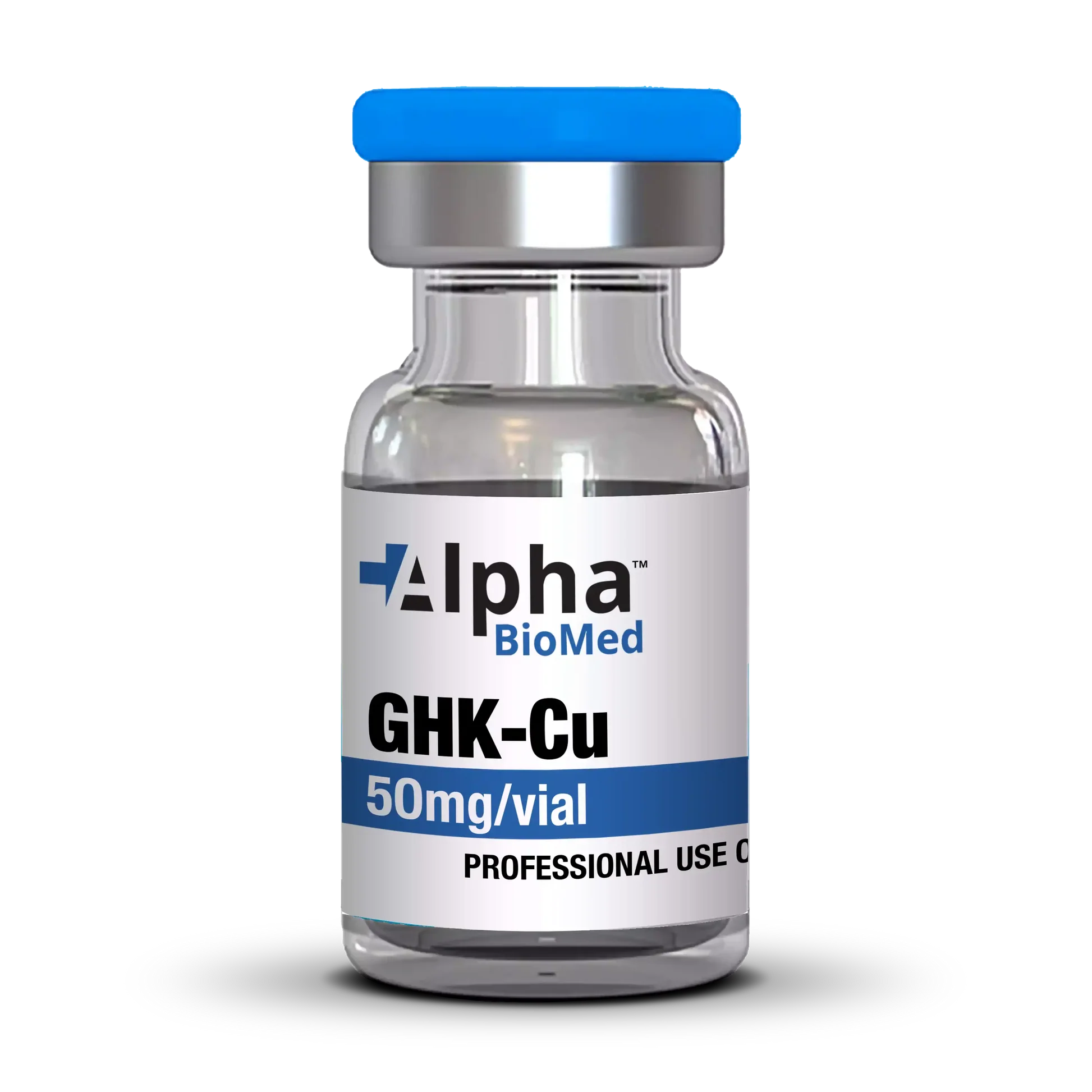
Description
Here you go — plain text, paste straight into WooCommerce:
GHK-Cu (copper peptide) is a naturally occurring tripeptide found in human plasma, saliva, and urine. First identified in the early 1970s, it has since become one of the most researched peptides in the fields of wound healing, skin biology, and cellular repair. Its unique ability to bind copper ions is central to its activity in research settings, where it has been shown to activate a broad range of biological processes associated with tissue regeneration and anti-inflammatory response.
Research Areas
GHK-Cu is being actively investigated across the following areas:
- Wound healing and tissue repair
- Collagen and elastin synthesis
- Skin remodelling and barrier function
- Anti-inflammatory activity
- Antioxidant response and oxidative stress
- Hair follicle biology
- Nerve regeneration
- Gene expression regulation
How It Works
GHK-Cu operates through several mechanisms that have made it a subject of sustained scientific interest. Its high affinity for copper (Cu²⁺) allows it to act as a copper transport molecule, delivering copper to enzymes that depend on it for function — including lysyl oxidase, which plays a direct role in collagen and elastin cross-linking.
In research models, GHK-Cu has demonstrated the ability to:
Stimulate collagen synthesis — Research has consistently shown GHK-Cu upregulates collagen production in fibroblasts, the cells responsible for maintaining the structural integrity of connective tissue.
Activate antioxidant defences — GHK-Cu appears to upregulate superoxide dismutase and other antioxidant enzymes, reducing oxidative damage in tissue under stress.
Modulate gene expression — A 2010 study by Pickart and Margolina identified GHK-Cu as capable of influencing the expression of over 4,000 human genes, many associated with tissue repair, inflammation control, and cellular regeneration.
Promote wound contraction and re-epithelialisation — Preclinical studies have demonstrated accelerated wound closure and improved tissue quality in GHK-Cu treated models.
Research Context
GHK-Cu has an unusually well-documented research history for a peptide of its size. Loren Pickart, who first isolated it in 1973, spent decades characterising its biological activity. More recent work has expanded interest into its potential role in skin ageing research, where declining plasma levels of GHK with age have prompted investigation into whether supplementation of the peptide in research settings can reverse some markers of cellular ageing.
Notably, GHK-Cu has demonstrated a largely biphasic concentration response in research — showing stimulatory effects at lower concentrations and different responses at higher concentrations. This makes precise dosing in research settings an important consideration.
Product Information
Format: Lyophilised powder Size: 10mg per vial Purity: ≥99% (third-party HPLC tested, COA available on request) Molecular formula: C₁₄H₂₃CuN₆O₄ Molecular weight: 403.9 g/mol CAS number: 89030-95-5 Storage (lyophilised): −20°C, away from light and moisture Storage (reconstituted): 2–8°C, use within 7 days
Frequently Asked Questions
Is GHK-Cu legal to purchase in the UK? Yes. GHK-Cu is not a controlled substance and is legal to purchase in the UK for research purposes. It is not licensed for human consumption or medical use.
What is the difference between GHK and GHK-Cu? GHK is the tripeptide glycine-histidine-lysine. GHK-Cu refers to the copper-bound complex, which is the biologically active form studied in research. The copper component is integral to its documented activity in research models.
Why is the 10mg vial used in research? The 10mg format provides a larger research quantity suitable for extended laboratory work or multi-variable study designs. It is the preferred format for researchers conducting longer-term investigations.
Is a Certificate of Analysis available? Yes. Each batch is independently tested by a third-party laboratory. A COA confirming identity and purity is available on request or via the product image gallery.
How should GHK-Cu be stored? Store as lyophilised powder at −20°C, away from direct light and moisture. Once reconstituted, refrigerate at 2–8°C and use within 7 days.
This product is intended strictly for laboratory research use only and is not approved for human or veterinary use. It is not a drug, dietary supplement, food additive, cosmetic, injectable, or therapeutic agent, and must not be used in or on humans or animals. The buyer assumes full responsibility for the safe and lawful handling, storage, and use of this product. Primal Mind & Body assumes no liability for misuse, injury, loss, or legal consequences arising from improper or unauthorised use. It is the buyer’s responsibility to ensure that purchase and possession of this product is legal in their jurisdiction. This product must not be resold for the purpose of human consumption.
For Research Use Only · Not for Human or Veterinary Use · Not for Diagnostic or Therapeutic Applications
Reviews
There are no reviews yet.